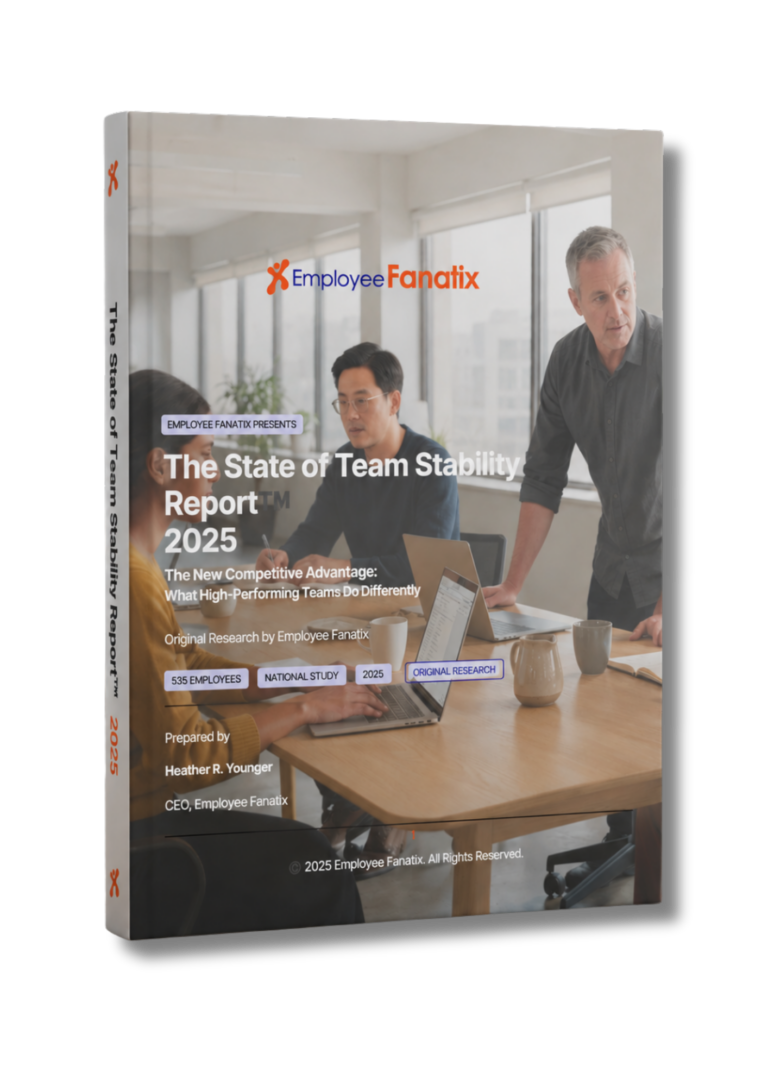
The State of Team Stability Report™ 2025
The New Competitive Advantage: What High-Performing Teams Do Differently
- 53.1% selected excessive workload as a contributor to burnout.
- 49.3% selected weak team dynamics.
- 55.3% selected greater role clarity and/or clearer communication as critical changes.
Study Methodology
Employee Fanatix combined two 2025 survey response files into one cleaned dataset of 535 respondents.
• Study year: 2025
• Combined dataset: n=535
• Multi-select questions were counted by the number of respondents selecting each option
• Topics included burnout, workload, team dynamics, leadership, psychological safety, recognition, communication, flexibility, role clarity, work setup, and AI
The findings are directional and based on self-reported survey data. Correlations do not establish causation.
What Is Wearing Teams Down—and What Would Actually Help?
Burnout is often treated as an individual endurance problem. The 2025 Team Culture Study points to something more actionable: many of the pressures people experience are shaped by how work is designed, communicated, and coordinated.
Employee Fanatix examined 535 survey responses to understand the conditions contributing to burnout—and the changes employees believe would make the greatest difference.
The findings give leaders a practical look at the systems behind exhaustion, trust, collaboration, clarity, recognition, flexibility, and the emerging role of AI at work.
Why This Study Matters
Organizations invest heavily in wellbeing, engagement, and culture. Yet many teams are still carrying friction that a wellness initiative alone cannot solve.
What if the strain on your team is not only about the amount of work—but also about ambiguity, weak team dynamics, inconsistent communication, and unclear ownership?
This study reveals:
• The most frequently selected contributors to burnout
• The changes employees most want leaders and organizations to make
• Why clarity, communication, trust, and collaboration are operational necessities
• Where leadership practices can reduce rework, decision confusion, and emotional load
• How employees’ belief that AI can help is associated with lower reported exhaustion—and why training and guardrails still matter
1. Burnout Is Not Only Personal. It Is System-Shaped.
Excessive workload was the most frequently selected burnout contributor at 53.1%. But the next signals were also organizational: 49.3% selected weak team dynamics and 42.2% selected poor leadership.
The implication: helping people manage stress matters, but leaders also need to examine the systems creating unnecessary strain.
2. The Everyday Team Environment Can Either Add Pressure—or Absorb It.
Respondents also selected lack of psychological safety (37.8%), lack of recognition (36.4%), and poor communication (32.3%) as contributors to burnout.
These are not soft extras. They shape whether people ask for help, surface risk, coordinate effectively, and feel that their effort is seen.
3. Employees Are Asking for Better Operating Conditions—not Just More Wellness Perks.
The most requested changes were better workload management and resource support (49.3%), greater flexibility in how or when work gets done (48.6%), and more trust and psychological safety within the team (48.0%).
Stronger peer collaboration, recognition, clear expectations, and consistent communication also ranked high.
4. Clarity Is One of the Most Practical Levers Leaders Can Pull.
One in four respondents (25.4%) selected ambiguous roles as a burnout contributor. On the solution side, 55.3% selected either greater clarity in team roles and expectations or clearer, more consistent communication.
Clarity reduces the coordination tax: less rework, fewer conflicting assumptions, faster decisions, and less emotional energy spent trying to determine who owns what.
The study also found that belief in AI as a burnout-reduction tool was associated with lower average exhaustion. This is an emerging signal—not proof of causation—and it reinforces the need to pair technology with training, thoughtful implementation, and clear guardrails.
Who Should Read This?
- Executives and senior business leaders
- Chief People Officers, HR, culture, and employee experience leaders
- Managers, team leaders, and functional leaders
- Learning and development and organizational development professionals
- Change, transformation, and operations leaders
- Consultants and coaches helping teams perform under pressure
About Employee Fanatix
Employee Fanatix is a workplace culture and leadership consultancy that helps organizations turn employee voice into practical leadership action.
Led by founder and CEO Heather R. Younger, the firm brings together research, active listening, leadership development, keynotes, retreats, and culture strategy to help leaders build teams where people feel heard, valued, clear, connected, and equipped to perform.
Heather is a workplace culture strategist, researcher, keynote speaker, and author whose work focuses on creating unshakable leaders, teams, and cultures.
See What Your Team May Be Carrying
Download the full 2025 Team Culture Study to understand the pressures employees named—and the practical changes leaders can make now.
Bring the Research Into the Room
Use these findings as a starting point for a leadership offsite, executive retreat, keynote, team reset, or culture strategy conversation.
Employee Fanatix can help your leaders translate the research into clearer operating norms, healthier team dynamics, stronger communication, and steadier performance under pressure.